Christmas Falala: A Designer's Review for Business Merch
As an experienced embroidery designer who has spent years refining designs for small business merchandise, I approach every new digital file with a critical eye. When evaluating Christmas Falala, my primary focus is not just on aesthetics, but on its viability as a commercial asset. This design is marketed as a versatile machine embroidery option suitable for sweaters, bags, towels, and hats, yet it explicitly states it is not an iron-on or a pre-made patch. For boutique owners, Etsy sellers, and apparel decorators looking to elevate their brand identity, understanding the nuances of this digital embroidery file is crucial before committing to production.
First Impressions: Professionalism and Brand Personality
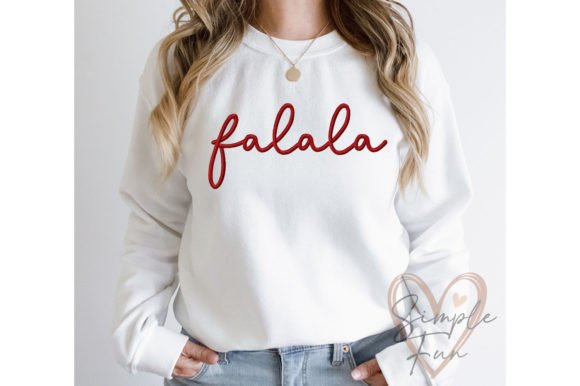
The title "Christmas Falala" immediately suggests a playful, festive, and perhaps slightly rustic or handmade personality. In the context of branded merchandise, the visual tone of a design dictates how customers perceive your business. Does it feel like a premium luxury item, or does it convey the warmth of a local artisanal shop? Based on the description, Christmas Falala appears to be designed for versatility, aiming to fit into various product categories without feeling out of place. However, for a professional review, we must look beyond the name. The success of this design in a commercial setting relies heavily on whether it balances holiday cheer with the clean lines required for a recognizable logo or accent mark. If the design leans too heavily into decorative elements, it may struggle to serve as a subtle brand identifier on work shirts or aprons.
Real-World Application in Small Business Merch
Imagine a local café or a creative studio preparing for the holiday season. They want to offer embroidered tote bags as customer gifts or create custom aprons for their staff. This is where Christmas Falala could shine as a sleeve detail or a chest logo accent. Unlike a generic stock image, a dedicated embroidery file allows for texture and depth that screen printing cannot match. For a bakery or florist, adding this design to a product label or packaging accent can significantly enhance the perceived value of the finished product.
However, the distinction that this is a digital file and not a physical patch is vital. To use this for embroidered patches, you would need to digitize the design onto a separate backing material or stitch it directly onto the garment with specific stabilizer techniques. For staff uniforms, the design works well as a morale booster, provided it is scaled correctly. On a cap, the curvature of the fabric presents a challenge; a design intended for a flat surface like a towel might distort if not adjusted for the dome shape of a hat. Similarly, while the file supports multiple formats, ensuring it fits within standard hoop sizes for small items like caps is essential for maintaining stitch density and preventing thread breaks.
Strategic Placement and Design Limitations
Not every location is suitable for every design. When considering Christmas Falala for high-frequency use items, caution is advised. Placing detailed embroidery on small patch sizes can lead to a cluttered look where individual stitches merge, losing the definition of the design. If the file contains tiny lettering or intricate outlines, these elements may become illegible when reduced for use on a pen, a keychain, or a small pocket square.
Fabric texture also plays a massive role. Embroidering on dark uniforms requires careful selection of thread colors to ensure contrast. If the design features light colors against a dark background without adequate underlay, the result may look muddy. Furthermore, items that require frequent washing, such as chef aprons or heavy-duty work shirts, demand robust stitching. Designs with high stitch density are prone to puckering if the wrong stabilizer is used. Before rolling out a line of branded merchandise, always test the design on the actual fabric you intend to use. A design that looks perfect on a sample swatch of cotton twill might fail miserably on a textured wool blend or a stretchy polyester blend often found in promotional wear.
Impact on Brand Identity and Customer Trust
In the world of handmade products and small business merch, consistency is key to building trust. Customers associate the quality of the embroidery with the quality of the product inside. A poorly executed digital embroidery file can make a premium item look cheap. Conversely, a well-placed, crisp design like Christmas Falala signals attention to detail. It tells the buyer that the brand cares about the presentation. When used correctly on a tote bag or a branded product add-on, the design becomes a visual anchor that reinforces brand recognition during events or daily use.
For Etsy sellers and crafters, having a library of high-quality design assets allows for faster turnaround times and more professional mockups. Using a cohesive design language across all products—from apron embroidery to cap embroidery—creates a unified brand experience. However, if the design feels too generic or clashes with your existing color palette, it can dilute your brand message. Always compare the new design beside your other existing assets to ensure visual consistency before finalizing any production run.
Practical Notes from the Studio
Before purchasing or downloading this file for commercial use, there are several technical steps every designer should take. First, test the design in black and white. This helps isolate the structure of the stitches from the influence of thread colors, revealing potential issues with spacing or density. Next, check the file details regarding the exact stitch count and recommended hoop size. Since the product description mentions multiple file formats but does not specify them, verify that your embroidery machine is compatible with the included files (such as .dst, .pes, or .exp).
Always inspect the spacing between elements. Tight spacing can cause threads to bunch up, while loose spacing can look unfinished. Confirm that the design works at your intended production size; a large design meant for a sweater back will not translate well to a small chest logo. Use proper stabilizer to support the fabric, especially if working with stretchy materials common in apparel. Create a printable mockup for client approval before running a full batch, as this prevents costly mistakes. Finally, and most importantly, confirm the commercial licensing terms. Ensure you have the right to sell finished goods featuring this design, as some digital files are restricted to personal use only.
Ultimately, Christmas Falala represents a valuable opportunity for businesses looking to add a festive touch to their inventory. By treating it as a serious design asset rather than just a decoration, small business owners can leverage its potential to enhance their brand identity and engage customers effectively. Whether used for event merch, customer gifts, or seasonal collections, the key lies in rigorous testing and strategic application. With the right preparation, this machine embroidery design can become a staple in your catalog of custom apparel and handmade products.